
A laboratory test came back showing coliform
This is the clear case. A certified lab result showing bacteria is the reason UV goes on a system.
Private wells · Add-on, not standard
We will start with the part most companies leave out: most wells around here do not need a UV light, and we do not include one by default. It belongs on your system when a laboratory test has shown bacteria, or when that is a specific concern of yours.
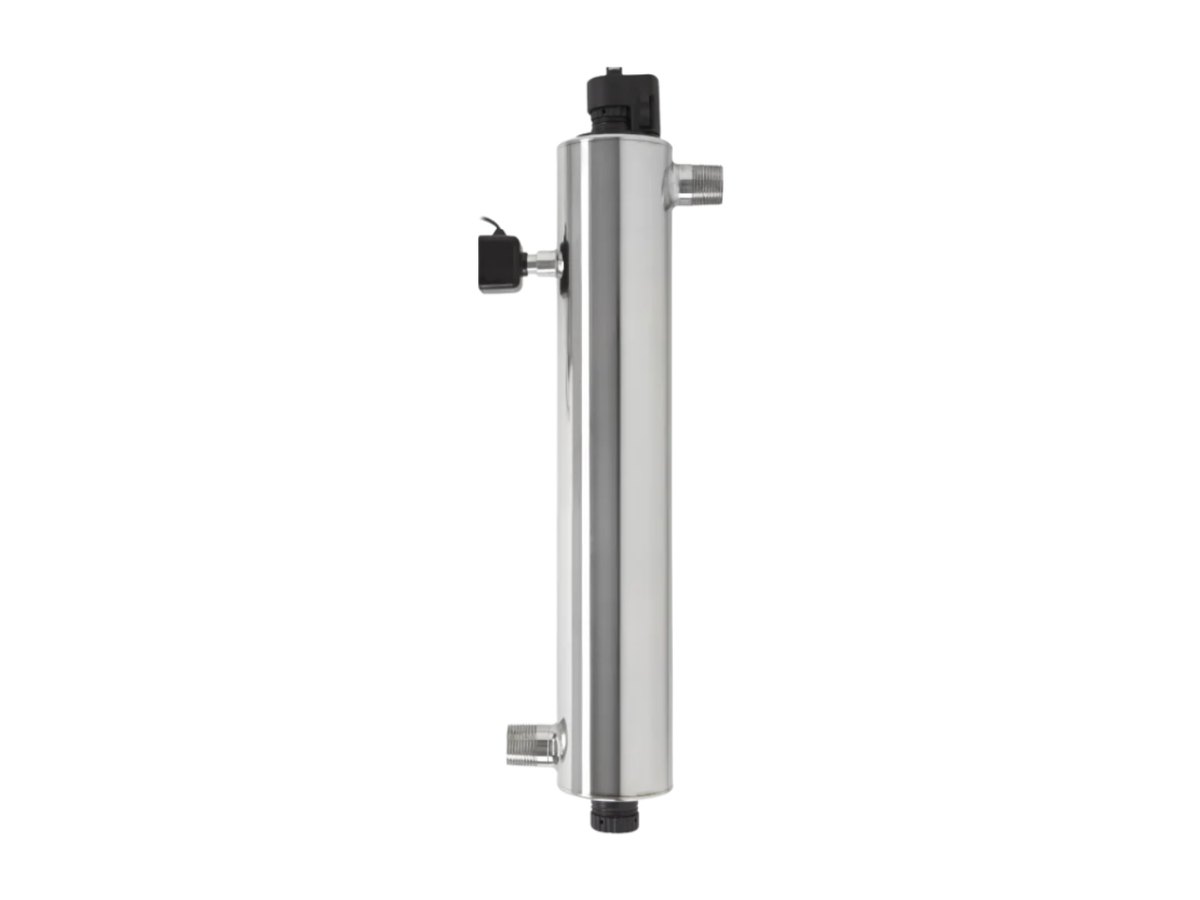
Quoted at the consultation, and only when a lab test calls for it
What this solves
We do not test for bacteria and we do not claim to treat it as a matter of course. Here is the honest version of when this equipment belongs on a house.
This is the clear case. A certified lab result showing bacteria is the reason UV goes on a system.
Surface water reaching the well is how bacteria get in. Fix the cause first; UV is the backstop.
A perfectly reasonable thing to want. We will fit it, and we will be clear about what it does.
If nothing has shown bacteria, we will tell you to get a lab test before spending money on a lamp.
How it works
Water passes through a stainless steel chamber around a UV lamp. The light disrupts the DNA of bacteria, viruses and cysts so they cannot reproduce.
It treats living organisms. It does not remove chemicals, metals, iron, hardness or sediment — and cloudy water shields organisms from the light, which is exactly why the UV goes last, after the sediment filter, iron tank and softener have cleared the water.
Nothing is added to your water and nothing is left behind. The lamp either works or it does not, and the ballast has a countdown timer so you know when it is due.
The equipment
A whole-home UV sized for a residential well, fitted at the end of the treatment train.
Stainless steel reactor, installed after the rest of the system. A spare lamp comes in the box, so your second year is already covered.
Specifications are the manufacturer’s published figures. We don’t claim a system removes a specific contaminant from your water unless its published specifications support that and a test has shown the contaminant is present.
The install
After the sediment filter, iron tank and softener. Installed anywhere else, it does not do its job.
120 V, under half an amp. It stays powered all the time.
About 37 inches of straight clearance, so the lamp can be pulled out once a year.
If you already have treatment in place, UV can usually be added without touching the rest.
Worth knowing
Harborline does not test for bacteria. A certified laboratory does that, and your town or state health department can tell you where to send a sample. Rhode Island’s Department of Health recommends private well owners test for coliform bacteria annually; Connecticut’s Department of Public Health recommends the same.
If a test comes back positive, the first job is finding out how it is getting in — a cracked well cap, a shallow or flooded well, a nearby septic problem. UV treats what reaches the lamp. It does not fix the cause, and nobody should sell it to you as though it does.
We will not tell you your water is unsafe in order to sell you equipment. If you have a test, bring it to the consultation and we will read it with you. If you do not, we will tell you to get one.
Questions
Probably not, unless a test has shown bacteria. Most private wells in Southern Rhode Island and Eastern Connecticut do not have a bacteria problem, and we do not fit UV by default. If you have never tested, test first — both state health departments recommend testing for coliform annually regardless.
Annually — the lamp runs about 9,000 hours, which works out to roughly twelve months. A spare lamp comes with the unit, so your second year is already covered. It is about a ten-minute swap you can do yourself, or we will do it.
No. UV only deals with living organisms — bacteria, viruses and cysts. Iron, manganese, hardness, sediment, chlorine and chemical contaminants all need different equipment. Anyone describing UV as general-purpose purification is misleading you.
Because the light has to actually reach the organisms. Iron, sediment and cloudiness shield them, so a UV lamp installed ahead of the filtration is far less effective. Sediment filter, then iron tank, then softener, then UV, then the house.
Neither. Nothing is added and nothing is left behind. It is light, not a chemical treatment, which is the main reason people prefer it to chlorination on a private well.
No. The unit is rated at 12 GPM, which is above what a house draws with everything running — typically six to eight. Flow ratings are maximums, not settings.
Yes. It fits at the end of the line and can usually be added without disturbing the existing equipment. Plenty of people do it that way, especially if they test after install and find something.
The ballast has a countdown timer showing lamp hours, which is your warning. Water keeps flowing when a lamp fails — it simply stops being treated — so the timer is worth looking at. If an alarm or a flow shutoff matters to you, say so at the consultation and we will price a unit that has one.
Free water consultation
Tell us what you’re noticing. We’ll look at your water, explain what’s going on, and give you a straight recommendation and a real price — installation included.