
Orange staining on fixtures
Iron is the usual explanation for rust-coloured rings in toilet tanks and streaks in tubs. It shows up in wells across South County and comes back no matter how often you scrub.
Washington County · Rhode Island
South Kingstown is really several water towns in one. Wakefield and Peace Dale run on a public groundwater system, Kingston has its own district, and a large share of the rest of town — Matunuck, Green Hill, Tuckertown, the roads off Route 138 — draws from private wells.
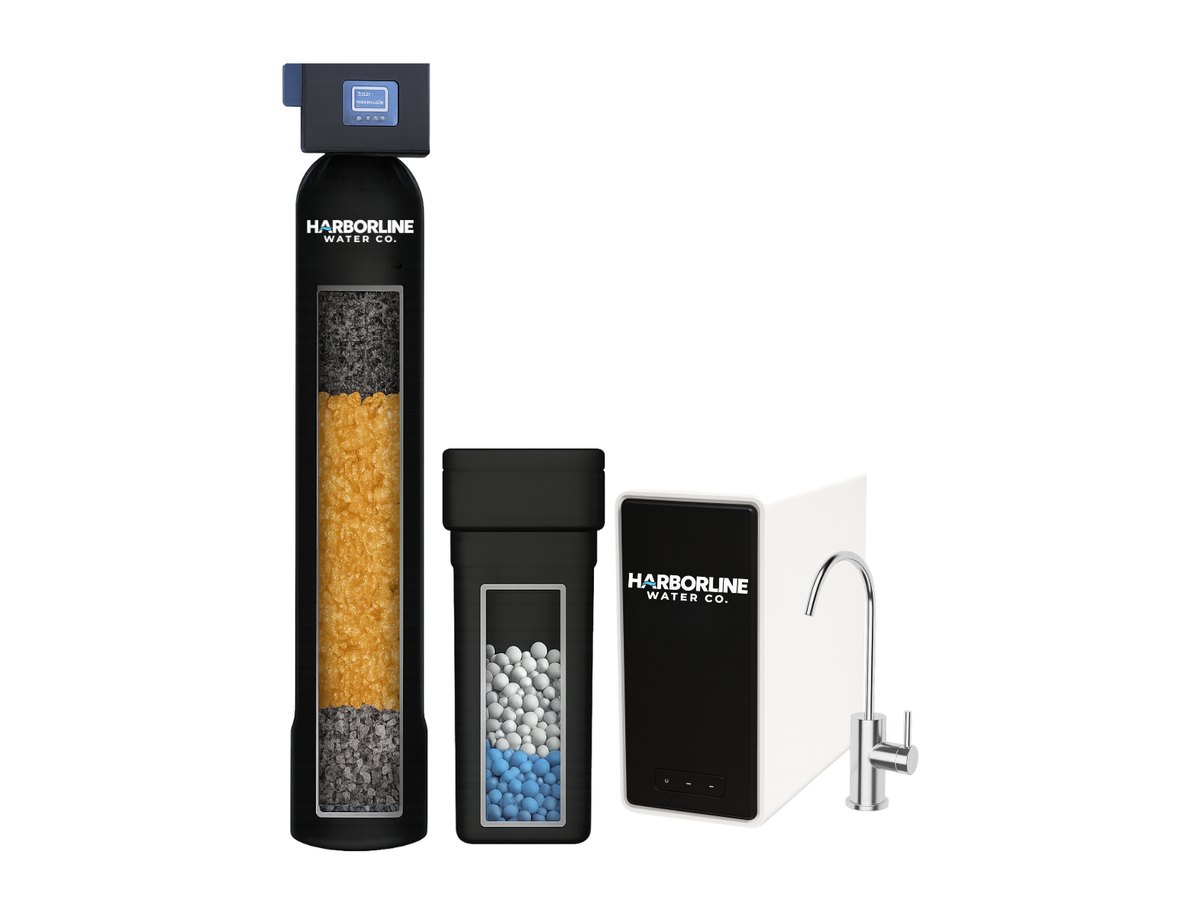
Water in South Kingstown
There is no single “South Kingstown water.” The town lists multiple water suppliers serving different parts of the community, with the Wakefield/Peace Dale area on the Veolia Water Rhode Island system (formerly Suez, and United Water before that) and the Kingston area served by the Kingston Water District.
What matters for treatment is that South Kingstown’s public supply is groundwater — pumped from wells in the local aquifer rather than piped from a distant reservoir. Groundwater picks up whatever the ground it sits in contains, which is why hardness, iron and manganese come up here more often than they do in a reservoir-fed city.
Outside the served villages, a great many South Kingstown homes are on their own wells — drawing from the same aquifer, with none of the treatment a public system applies before the water reaches the tap.
Sources: Rhode Island Department of Health — Testing Your Well Water · Town of South Kingstown — Water Suppliers. Figures quoted here come from the supplier’s own published water quality reporting and from state health department guidance. For the current year’s numbers, read your supplier’s annual report — they are required to publish one and you are entitled to it.
What homeowners notice
These are symptoms, not diagnoses. What is actually causing them at your address is a question for a test — but knowing what to look for is where it starts.
Iron is the usual explanation for rust-coloured rings in toilet tanks and streaks in tubs. It shows up in wells across South County and comes back no matter how often you scrub.
Manganese stains darker than iron — near-black flecks in the dishwasher, a gray cast on white laundry. It often turns up alongside iron in the same well.
Crust on the shower head, film on glassware, soap that will not lather. Hardness varies well by well here, so two houses on the same road can be different.
Usually more noticeable on the hot side. Common enough in South County wells to be worth ruling out rather than living with.
Two different starting points
If you are on the Wakefield or Kingston system, your water is treated and monitored before it reaches you, and your supplier publishes an annual water quality report you are entitled to read. What homeowners on those systems usually call us about is aesthetic rather than regulatory: hardness leaving scale on fixtures and inside the water heater, and taste at the kitchen tap. A softener handles the first; reverse osmosis at the sink handles the second.
If you are on a well, nobody is testing your water but you. Rhode Island’s Department of Health suggests private well owners test every year for coliform bacteria, nitrate and nitrite, colour, chloride, sodium and turbidity; every three to five years for metals, corrosivity and hardness; and every five to ten years for volatile organic compounds. Test first, then treat — a South Kingstown well with iron and a South Kingstown well with sulfur need different equipment, and the only way to know which you have is to look.
Every recommendation we make is based on the water conditions in that specific home. We don’t quote equipment before we understand what the water is doing.
Harborline solutions
Four core systems and a set of add-ons. Which one fits depends on your water source and what a test actually finds.
We don’t claim any system removes a specific contaminant from your water. What a given system addresses depends on its actual specifications and on what your water actually contains.
How it works
Staining, smell, scale, taste — call, text a photo, or send the form.
Your water source, the conditions in the home, your plumbing and your household’s use.
A clear explanation of the problem, the system that addresses it, and the price — before any work.
Installed by us, with standard installation labour included in the package price.
You know who to call, and your warranty coverage is in writing.
Why Harborline
We work in Southern Rhode Island and Eastern Connecticut. You’re not calling a national call centre.
We look at the water before we talk about systems. Not the other way round.
If your water doesn’t need a softener, we’ll tell you that — and we do tell people that.
You get the number and the reasoning before the work, not after.
Installed by us, not handed to a subcontractor you’ve never spoken to.
Calls and texts get answered, and you know who to reach afterward.
Questions
It depends where in town you are. The town lists several suppliers — the Wakefield and Peace Dale area is on the Veolia Water Rhode Island system, Kingston has the Kingston Water District, and other areas are served by smaller systems or by private wells. If you are not sure which applies to you, check whether you receive a water bill.
Yes. Outside the served villages, private wells are common — Matunuck, Green Hill, Tuckertown and much of the town’s rural western and southern reaches. If you have a well cap in the yard and no water bill, you are on a well.
It varies, which is the honest answer. The public supply here is groundwater rather than reservoir water, and groundwater tends to carry more dissolved mineral than surface water does. On a private well it depends entirely on your well. Hardness is one of the things worth measuring before anyone sells you a softener.
Iron is the most likely cause, sometimes with manganese alongside it. It is an aesthetic problem rather than a health one, but it is persistent — staining returns within days of cleaning — and it is treatable once you know how much iron you are dealing with.
Rhode Island’s Department of Health recommends an annual test for bacteria, nitrate/nitrite, chloride, sodium, colour and turbidity, plus metals, corrosivity and hardness every three to five years. If you are buying or selling a South Kingstown home with a well, testing is worth doing regardless.
Yes — Wakefield, Peace Dale, Kingston, West Kingston, Matunuck, Green Hill, Snug Harbor and the rest of the town, on public water or on a well.
Free water assessment
Tell us what you’re noticing in your South Kingstown home. We’ll look at your water, explain what’s going on, and give you a straight recommendation and a real price.