
Scale on fixtures and in the water heater
The most common reason we get called in East Greenwich. Water heaters that fail early are the expensive end of it.
Kent County · Rhode Island
A largely public-water town with a good deal of older housing stock — which means the water questions here are usually about taste, scale, and what the plumbing between the main and your tap has been doing for the last eighty years.
Water in East Greenwich
East Greenwich is served predominantly by public water, with private wells in the less densely developed western reaches toward the Frenchtown and Exeter side.
The thing that distinguishes East Greenwich is its housing: a substantial stock of older homes, particularly around the Hill and Harbour district and the Main Street village. Public water arrives treated and monitored, but the last stretch of pipe between the street and your kitchen tap is yours — and in a house of a certain age that stretch can be doing things the utility’s report cannot tell you about.
Sources: Rhode Island Department of Health — Testing Your Well Water. Figures quoted here come from the supplier’s own published water quality reporting and from state health department guidance. For the current year’s numbers, read your supplier’s annual report — they are required to publish one and you are entitled to it.
What homeowners notice
These are symptoms, not diagnoses. What is actually causing them at your address is a question for a test — but knowing what to look for is where it starts.
The most common reason we get called in East Greenwich. Water heaters that fail early are the expensive end of it.
Public systems disinfect. Carbon at the house or reverse osmosis at the sink removes the taste.
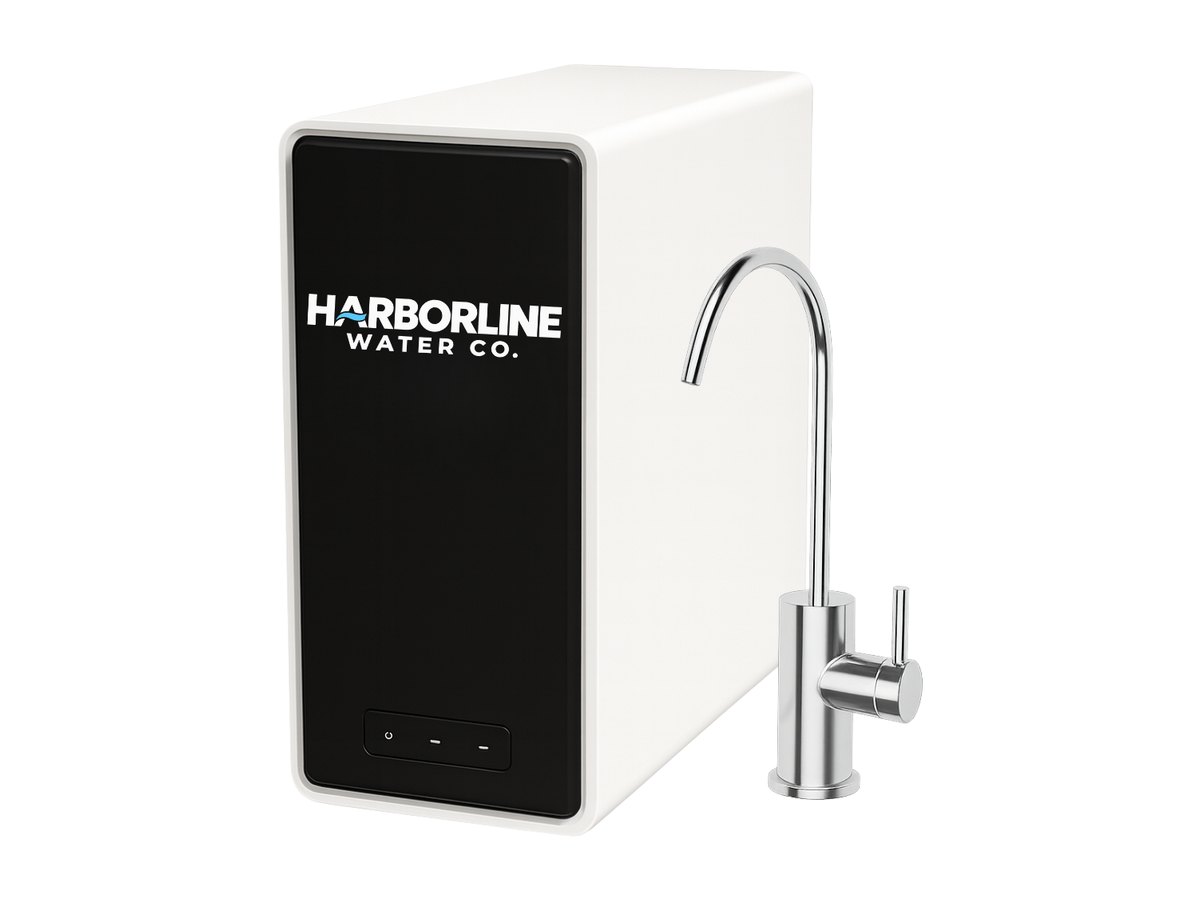
If you would rather not think about what the pipes between the street and the tap are contributing, an under-sink reverse osmosis system is the direct answer.
Dry skin after a shower and hair that will not rinse clean are hardness complaints more often than not.
Two different starting points
On public water your supplier treats, monitors and reports. What is left is the aesthetic layer and the plumbing inside your own walls. Softening addresses scale across the whole house; reverse osmosis at the kitchen sink addresses what you drink and cook with, and it does so after the water has travelled through your own pipes — which is the part of the journey no utility report covers.
In the western part of town toward Frenchtown and the Exeter line, private wells are more common. Rhode Island’s Department of Health suggests private well owners test every year for coliform bacteria, nitrate and nitrite, colour, chloride, sodium and turbidity; every three to five years for metals, corrosivity and hardness; and every five to ten years for volatile organic compounds.
Every recommendation we make is based on the water conditions in that specific home. We don’t quote equipment before we understand what the water is doing.
Harborline solutions
Four core systems and a set of add-ons. Which one fits depends on your water source and what a test actually finds.
We don’t claim any system removes a specific contaminant from your water. What a given system addresses depends on its actual specifications and on what your water actually contains.
How it works
Staining, smell, scale, taste — call, text a photo, or send the form.
Your water source, the conditions in the home, your plumbing and your household’s use.
A clear explanation of the problem, the system that addresses it, and the price — before any work.
Installed by us, with standard installation labour included in the package price.
You know who to call, and your warranty coverage is in writing.
Why Harborline
We work in Southern Rhode Island and Eastern Connecticut. You’re not calling a national call centre.
We look at the water before we talk about systems. Not the other way round.
If your water doesn’t need a softener, we’ll tell you that — and we do tell people that.
You get the number and the reasoning before the work, not after.
Installed by us, not handed to a subcontractor you’ve never spoken to.
Calls and texts get answered, and you know who to reach afterward.
Questions
Scale on fixtures and short water heater life are the two most common complaints we hear here, and both point at hardness. For a number that means something, measure the water at your own tap — that is what a softener would actually be sized against.
Some, mostly in the less developed western part of town toward the Frenchtown and Exeter side. The bulk of the town is on public water.
A utility's report describes the water it delivers to the street. It cannot describe what happens in the pipes inside your house. If that gap bothers you — and in older housing stock it is a reasonable thing to think about — an under-sink reverse osmosis system treats the water at the point you actually drink it.
Scale accumulation inside a water heater reduces its efficiency and shortens its life. Reducing hardness reduces scale. We will not put a number on the years it buys you, because that depends on your water and your heater.
Yes — the village, the Hill and Harbour district, Frenchtown and the western end of town.
Free water assessment
Tell us what you’re noticing in your East Greenwich home. We’ll look at your water, explain what’s going on, and give you a straight recommendation and a real price.