
Chlorine taste and smell
Public water is disinfected, and some homes notice it more than others, especially in drinking water and coffee.
Newport County · Rhode Island
Most of Portsmouth gets water the Portsmouth Water and Fire District buys from Newport Water. Parts of town, including Prudence Island, are on their own systems or private wells.
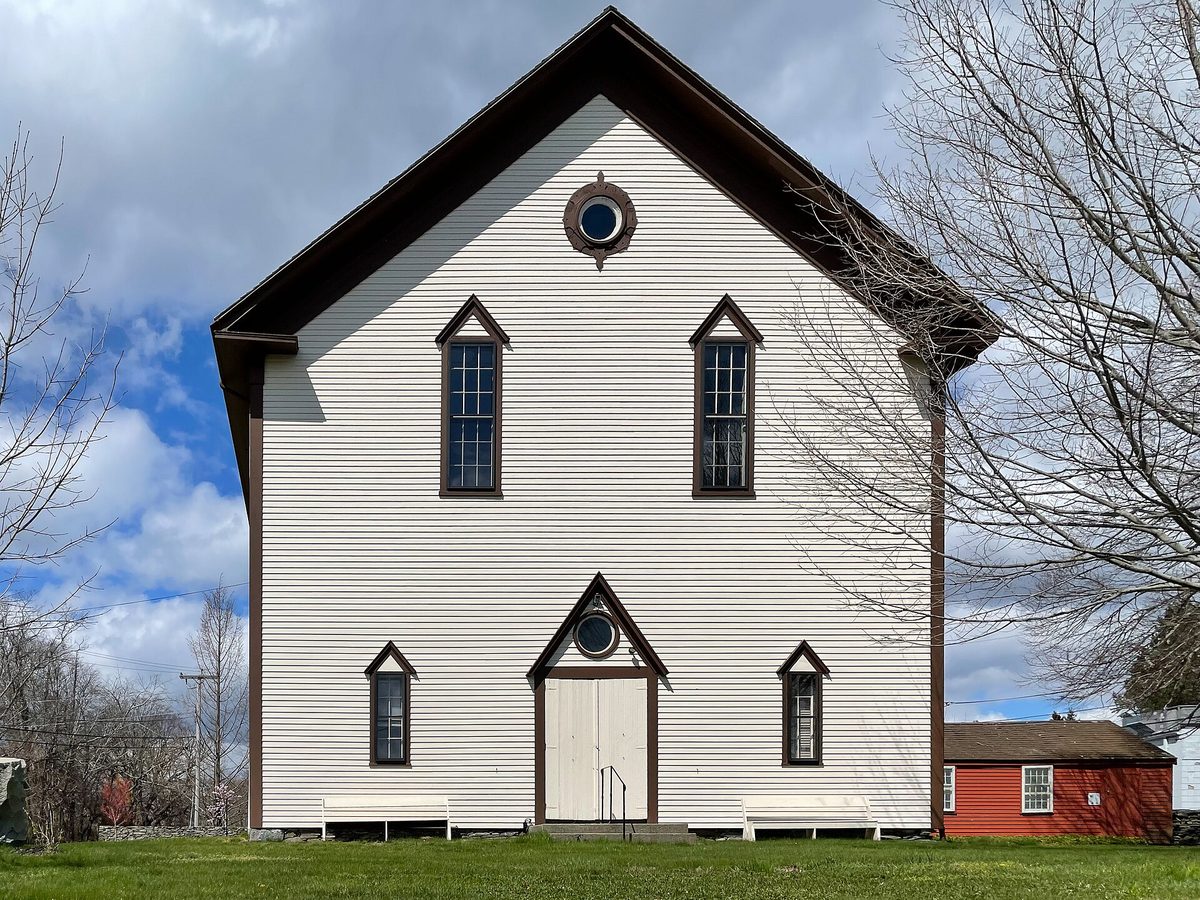
Union Church in Portsmouth. Photo: Kenneth C. Zirkel, CC BY-SA 4.0, cropped.
Water in Portsmouth
The Portsmouth Water and Fire District doesn’t own its own water supply. According to the District, it buys its regular supply wholesale from the Newport Water department and relies on the Stone Bridge Fire District in Tiverton for emergency supply. Newport Water also serves a small part of Portsmouth directly.
Newport Water’s supply is a chain of reservoirs on Aquidneck Island and in Tiverton and Little Compton, treated at the Lawton Valley plant here in Portsmouth and the Station No. 1 plant in Newport. Surface water like that arrives disinfected, so chlorine taste and the byproducts of disinfection are what people on town water notice and ask about.
Homes outside the district, and much of Prudence Island, are on private wells or small systems, and those are a different question entirely: what your own well is bringing up.
Sources: Portsmouth Water & Fire District — FAQ; City of Newport — Utilities; Newport Water annual water quality report; Rhode Island Department of Health — Testing Your Well Water. Figures quoted here come from the supplier’s own published water quality reporting and from state health department guidance. For the current year’s numbers, read your supplier’s annual report. They are required to publish one and you are entitled to it.
Here’s what the Environmental Working Group reports for the public water serving Portsmouth. Want to know what’s at your own tap? That’s what the free water consultation is for.
| Detected above EWG’s guideline | This system | EWG guideline | Times guideline | Legal limit |
|---|---|---|---|---|
| Arsenic* | 0.138 ppb | 0.004 ppb | 34x | 10 ppb |
| Bromodichloromethane | 14.7 ppb | 0.06 ppb | 246x | None |
| Bromoform | 1.60 ppb | 0.5 ppb | 3.2x | None |
| Chlorite* | 105.0 ppb | 50 ppb | 2.1x | 1,000 ppb |
| Chloroform | 24.5 ppb | 0.4 ppb | 61x | None |
| Chromium (hexavalent) | 0.0975 ppb | 0.02 ppb | 4.9x | None |
| Dibromochloromethane | 9.73 ppb | 0.1 ppb | 97x | None |
| Dichloroacetic acid | 7.54 ppb | 0.2 ppb | 38x | None |
| Haloacetic acids (HAA5) | 14.4 ppb | 0.1 ppb | 144x | 60 ppb |
| Haloacetic acids (HAA9) | 35.6 ppb | 0.06 ppb | 593x | None |
| Nitrate* | 0.693 ppm | 0.14 ppm | 5x | 10 ppm |
| Nitrate and nitrite* | 0.390 ppm | 0.14 ppm | 2.8x | 10 ppm |
| Perfluorooctanoic acid (PFOA)* | 1.20 ppt | 0.09 ppt | 13x | Proposed 4 ppt |
| Total trihalomethanes (TTHMs) | 50.6 ppb | 0.15 ppb | 337x | 80 ppb |
| Trichloroacetic acid | 2.41 ppb | 0.1 ppb | 24x | None |
See the full EWG report for Portsmouth Water & Fire District → Results marked * come from the utility that supplies this system.
| Detected above EWG’s guideline | This system | EWG guideline | Times guideline | Legal limit |
|---|---|---|---|---|
| Arsenic | 0.138 ppb | 0.004 ppb | 34x | 10 ppb |
| Bromodichloromethane | 10.3 ppb | 0.06 ppb | 172x | None |
| Bromoform | 2.06 ppb | 0.5 ppb | 4.1x | None |
| Chlorite | 105.0 ppb | 50 ppb | 2.1x | 1,000 ppb |
| Chloroform | 13.8 ppb | 0.4 ppb | 34x | None |
| Chromium (hexavalent) | 0.0497 ppb | 0.02 ppb | 2.5x | None |
| Dibromochloromethane | 8.20 ppb | 0.1 ppb | 82x | None |
| Dichloroacetic acid | 6.79 ppb | 0.2 ppb | 34x | None |
| Haloacetic acids (HAA5) | 14.2 ppb | 0.1 ppb | 142x | 60 ppb |
| Haloacetic acids (HAA9) | 23.3 ppb | 0.06 ppb | 389x | None |
| Nitrate | 0.693 ppm | 0.14 ppm | 5x | 10 ppm |
| Nitrate and nitrite | 0.390 ppm | 0.14 ppm | 2.8x | 10 ppm |
| Perfluorooctanoic acid (PFOA) | 1.20 ppt | 0.09 ppt | 13x | Proposed 4 ppt |
| Total trihalomethanes (TTHMs) | 50.9 ppb | 0.15 ppb | 339x | 80 ppb |
| Trichloroacetic acid | 2.25 ppb | 0.1 ppb | 22x | None |
Figures are from the EWG Tap Water Database, checked November 2026. EWG’s health guidelines are stricter than federal legal limits, so a number above EWG’s guideline does not mean a system is breaking the law. These are results for the public system, not your tap. Harborline is not affiliated with EWG.
What homeowners notice
These are symptoms, not diagnoses. What is actually causing them at your address is a question for a test — but knowing what to look for is where it starts.
Public water is disinfected, and some homes notice it more than others, especially in drinking water and coffee.
They form when chlorine meets natural material in reservoir water, and they show up in the public water data below. Ask us what your options are.
If you would rather not think about what the pipes between the street and the tap are contributing, an under-sink reverse osmosis system is the direct answer.
Dry skin after a shower and hair that will not rinse clean are worth mentioning, even on softer reservoir water.
Two different starting points
On public water your supplier treats, monitors and reports. What is left is the aesthetic layer and the plumbing inside your own walls. Softening addresses scale across the whole house; reverse osmosis at the kitchen sink addresses what you drink and cook with, and it does so after the water has travelled through your own pipes — which is the part of the journey no utility report covers.
Homes outside the water district, including much of Prudence Island, are on private wells. If yours is one of them, Rhode Island’s Department of Health suggests private well owners test every year for coliform bacteria, nitrate and nitrite, color, chloride, sodium and turbidity; every three to five years for metals, corrosivity and hardness; and every five to ten years for volatile organic compounds.
Every recommendation we make is based on the water conditions in that specific home. We don’t quote equipment before we understand what the water is doing.
Harborline solutions
Four core systems and a set of add-ons. Which one fits depends on your water source and what a test actually finds.
We don’t claim any system removes a specific contaminant from your water. What a given system addresses depends on its actual specifications and on what your water actually contains.
How it works
Staining, smell, scale, taste — call, text a photo, or send the form.
Your water source, the conditions in the home, your plumbing and your household’s use.
A clear explanation of the problem, the system that addresses it, and the price — before any work.
Installed by a licensed plumber, with standard installation labor included in the package price.
You know who to call, and your warranty coverage is in writing.
Why Harborline
We work in Rhode Island and Eastern Connecticut. You’re not calling a national call center.
We look at the water before we talk about systems. Not the other way around.
If your water doesn’t need a softener, we’ll tell you that — and we do tell people that.
You get the number and the reasoning before the work, not after.
Installed by a licensed plumber.
Calls and texts get answered, and you know who to reach afterward.
Questions
Most of town is served by the Portsmouth Water and Fire District, which buys its water from Newport Water. Newport Water serves a small part of Portsmouth directly, and homes outside the district are on private wells.
Reservoir water tends to be softer than well water, so hardness is usually a smaller issue here than in South County. Some homes still see scale on fixtures and inside the water heater, and the way to know for your house is to measure at your own tap, which we do at the free water consultation.
Public water is disinfected so it stays safe all the way through the pipes, and some homes notice the taste more than others. Whole-home carbon filtration or reverse osmosis at the kitchen sink are the usual ways people deal with it.
Yes. If your softener is old, running out of soft water, or going through more salt than it used to, we check your water and tell you whether it is worth keeping or time to replace it. We don’t repair other companies’ equipment, but we can put in a new system, usually in one visit.
Rhode Island’s Department of Health suggests private well owners test every year for coliform bacteria, nitrate and nitrite, color, chloride, sodium and turbidity, and every three to five years for metals, corrosivity and hardness. Near the shore, chloride and sodium are worth keeping an eye on.
Yes, including Island Park, Common Fence Point, Bristol Ferry, Melville and Prudence Island.
Service area
Harborline serves homes across Portsmouth, RI, on public water and private wells. Not sure if we reach your street? Call or text and we’ll tell you.
Free water assessment
Tell us what you’re noticing in your Portsmouth home. We’ll look at your water, explain what’s going on, and give you a straight recommendation and a real price.